Why Aviation Confuses Performance Management With Accounting

Fabrice
Diedrich
Co-founder & CEO
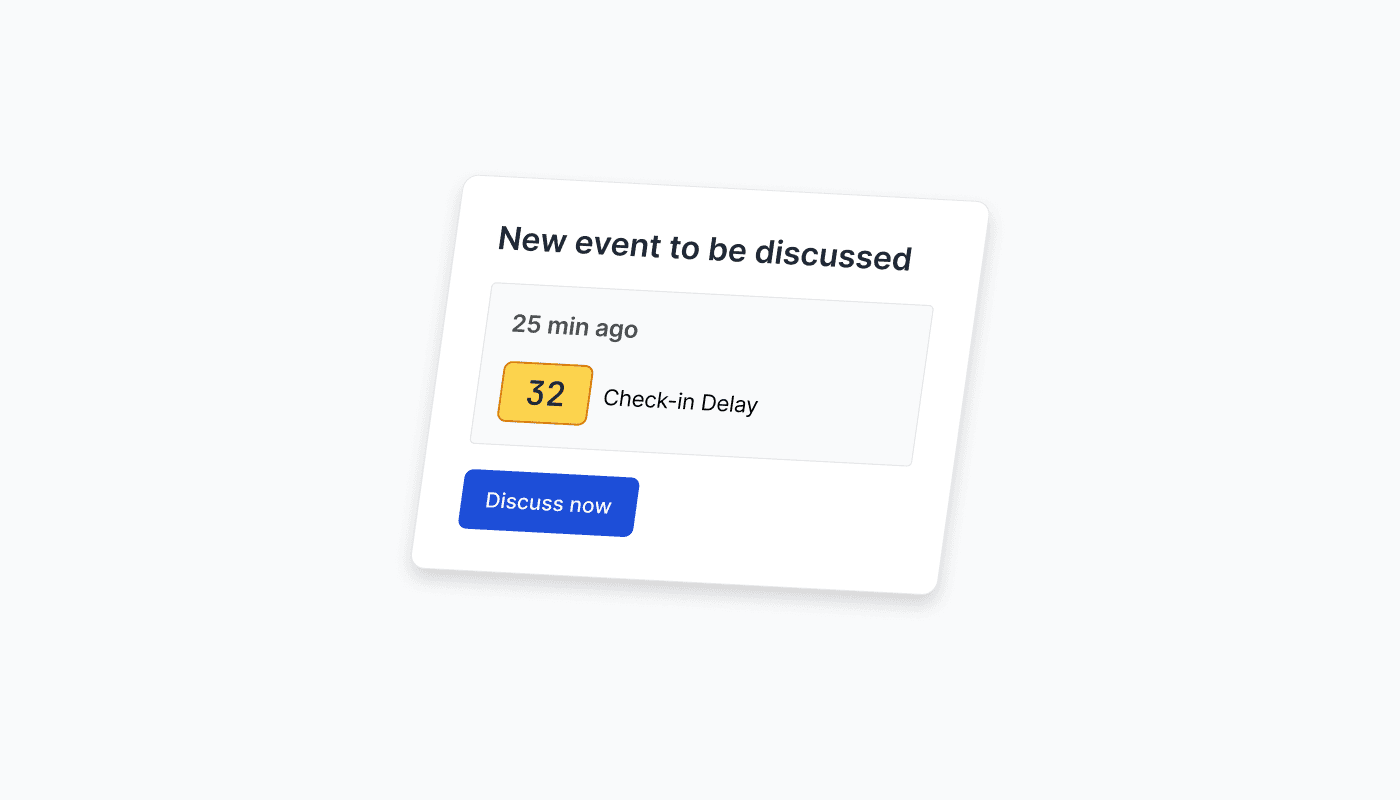
In aviation ground operations, performance management is treated as a reporting exercise. Every month, large amounts of data are collected: delay minutes, delay codes, SLA targets, penalty calculations. Dashboards are generated. Reviews are scheduled. Discussions take place. And yet, the same delays keep happening. This isn’t because teams don’t care about performance. It’s because the way performance is managed structurally prevents improvement.
Performance accounting vs. performance management
What most organizations call “performance management” is, in practice, performance accounting. Data is reviewed long after operations are finished. The discussion is detached from the actual event. Context is incomplete. People rely on codes, not on shared understanding. At that point, the only remaining lever is financial:
Who caused the delay?
Which SLA applies?
Who pays?
This creates a system where delay data is primarily used to assign responsibility — not to prevent recurrence.
Why monthly reviews fail by design
Monthly performance reviews are too slow for operational environments. Ground operations are dynamic. Conditions change daily, sometimes hourly. Staffing, equipment, weather, rotations, and dependencies constantly interact. When issues are discussed weeks later:
Operational context is lost
Root causes are reconstructed, not observed
Incentives shift from learning to defending positions
The result is predictable: discussions focus on penalties instead of improvements. Not because people want conflict — but because the system leaves no alternative.
The original purpose of delay codes
Delay codes were never meant to be a billing tool. They exist to explain what happened:
Which process failed
Where handovers broke down
What constraint caused the delay
Used correctly, delay codes are a diagnostic tool.
Used too late, they become a legal argument.
When the first meaningful discussion happens at the end of the month, delay codes lose their operational value.
Feedback loops are the missing layer
What’s missing in ground operations is not more data — it’s shorter feedback loops. Effective performance improvement requires:
Visibility while operations are still ongoing
Shared context between airlines and Ground Handling Providers
Early identification of recurring patterns
Conversations focused on correction, not justification
When teams can see emerging issues early, small adjustments prevent large delays later. That’s where the real financial value lies — not in penalties, but in avoided disruption.
From blame systems to improvement systems
Most current setups unintentionally optimize for blame. If the system only reacts after the fact, people protect themselves. If the system supports early correction, people collaborate.
This is a structural problem, not a cultural one.
You don’t fix it by telling teams to “collaborate better.”
You fix it by giving them the right information at the right time.
The industry shift ahead
Aviation is entering a phase where transparency, real-time visibility, and shared operational intelligence will matter more than perfectly calculated monthly reports. The organizations that improve fastest won’t be the ones with the most KPIs — but the ones that shorten the distance between what happens and what gets discussed.
Performance improvement doesn’t start in the review meeting.
It starts during operations.

