
Last week, we had the opportunity to attend GHI Americas 2026 in Panama and meet with Airlines and Ground Handling Providers from across the region.
As always, one of the most valuable aspects of GHI was the ability to have open and honest conversations about the operational challenges airlines face every day.
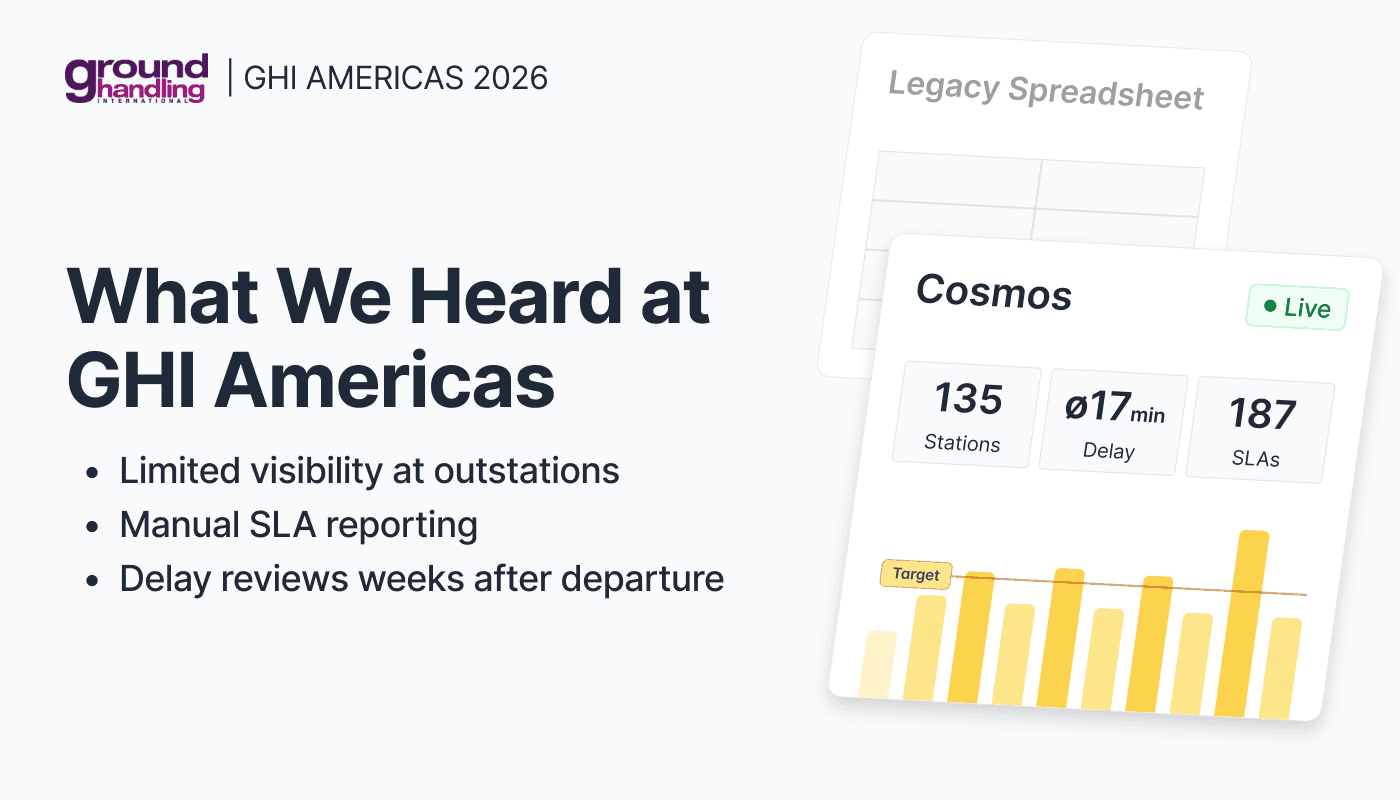
Over the course of more than 30 meetings with Airlines and Ground Handling Providers, we noticed several recurring themes. While every organization operates differently, the following three topics came up again and again.
Limited Visibility at Outstations
Many airline teams are responsible for dozens or even hundreds of stations worldwide, yet they often have limited visibility into what is actually happening on the ground.
Regional managers and airport operations teams are expected to monitor performance, identify issues and work with providers to improve service levels. However, in many cases they rely on reports, emails and local feedback rather than having access to real-time operational information.
As networks continue to grow, this challenge becomes increasingly difficult to manage.
SLA Management is Still Highly Manual
Many airlines still rely on spreadsheets, emails and manual processes to track provider performance and calculate penalties. In some organizations, finance teams spend significant time collecting operational data, validating SLA breaches and preparing reports.
This creates a heavy administrative workload and makes it difficult to maintain a consistent view of SLA performance across stations, providers and time periods. Especially in larger networks, the process quickly becomes fragmented: different teams work with different files, data sources and reporting formats.
The result is not only manual effort, but also a lack of a shared source of truth. When performance reviews take place, teams often spend more time reconciling data than discussing how provider performance can actually be improved.
Moving Beyond Penalty Management
What we found particularly interesting is that many airlines are beginning to question whether SLA management should be treated purely as a financial process.
When SLA discussions happen only at the end of the month, they often become focused on claims, waivers and penalties. By then, the operational context is usually gone, making it difficult to understand what actually caused a delay or service failure.
Several airlines we spoke with expressed interest in using SLA management as more than just a contractual mechanism. Instead, they see an opportunity to use SLA data as a collaboration layer between airlines and Ground Handling Providers. The goal is to identify delay drivers earlier, discuss operational issues while they are still fresh and create a more transparent process for improving performance over time.
While most organizations are still in the early stages of this journey, the desire to move from reactive reporting towards proactive performance management was one of the strongest themes we observed throughout the conference.
Looking Ahead
The conversations in Panama confirmed that airlines are actively looking for better ways to manage provider performance across increasingly complex networks.
While every airline approaches the challenge differently, the themes were remarkably consistent: limited visibility at outstations, manual SLA processes and a growing desire to use operational data to improve collaboration with Ground Handling Providers.
We’re looking forward to continuing many of these discussions over the coming weeks.

